
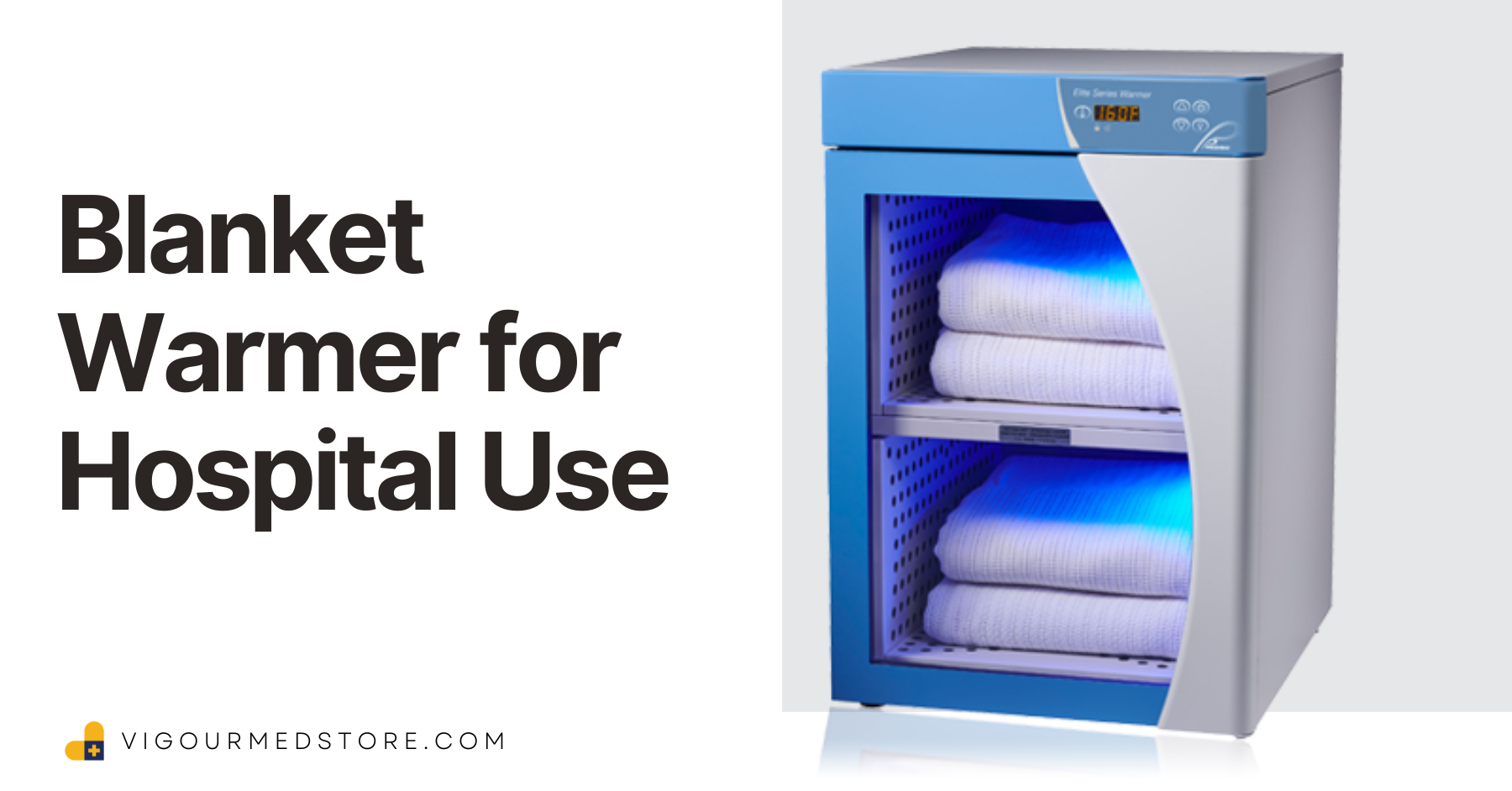
Blanket warmers for hospital and home use play an important role in maintaining patient comfort and safety during the surgical journey. More than 50% of surgical patients experience inadvertent hypothermia during the surgical period. This condition can increase the risk of surgical site infections (SSIs), delay wound healing, trigger cardiac complications, and extend recovery time.
The AORN (Association of PeriOperative Registered Nurses) guidelines for 2025 emphasize the importance of maintaining normal body temperature —keeping a patient's core temperature between 36.5°C and 37.5°C—to improve outcomes and reduce preventable risks.
This guide gives you a simple breakdown of how hospital-grade blanket warmers work, their safety features, and what to look for in different care settings. Whether you're a clinician or choosing a blanket warmer for patient comfort, you'll find everything explained clearly and practically.
What is a Blanket Warmer and How Does It Work?
Understanding Blanket Warmer Technology
A blanket warmer—often called a medical blanket warmer cabinet or heated linen closet—is a medical device designed to safely warm blankets, gowns, towels, and other linens to controlled temperatures.
Its primary purpose is to improve patient comfort, stabilize body temperature, and enhance overall perioperative care.
Blanket warming cabinet warmers use stable convection technology to distribute heat evenly throughout the cabinet, ensuring all blankets reach the desired temperature.
Consistent blanket warming helps clinicians maintain patient core temperature balance before, during, and after operation procedures.

Buy Now - Precision Temperature Control Blanket Warming Cabinet
How Blanket Warmers Operate
Blanket warmers with adjustable temperature control operate through convection heating, where warm air circulates within the cabinet to heat the items. Modern blanket warming cabinets found in hospitals and surgical centres typically include:
- Temperature-controlled thermostats for precise heat settings
- Air circulation systems that move warm air evenly across shelves
- Multiple compartments based on capacity and storage needs
- Built-in safety features, such as overheat protection and locking temperature controls
- Digital displays that show current temperature readings.
Inside the blanket warmers and warming cabinets, the heating mechanism gradually warms the air. That air then circulates the blankets and linens, raising their temperature safely.
Unlike active warming tools (such as forced-air warming systems used during procedures), blanket warmers fall under passive warming methods. Both approaches are essential components of comprehensive temperature management in preoperative and postoperative care.
Types of Heat Distribution
Convection Warming
Warm air circulates through the cabinet, evenly distributing heat across all stored linens, making this the most commonly used method due to its reliability and energy efficiency.
Radiant Warming
In radiant systems, heat transfers directly from internal heating elements to the linens. This method warms items without relying on circulating airflow.
Hybrid Systems
Many modern blanket warmers for home and hospital use a hybrid of convection and radiant heating. Combining both systems improves efficiency, reduces warm-up time, and helps maintain a more uniform temperature.
Check Out Our Range of Blanket Warmers for Every Use
Why Do Hospitals Use Blanket Warmers?
Clinical Importance of Patient Warming
Blanket warmers help maintain body temperature safely within permissible limits, improve comfort, and reduce complications before, during, and after surgery.
Hypothermia Prevention
More than 73.5% of surgical patients develop hypothermia after anesthesia. AORN's 2025 guidelines show that preoperative warming can reduce hypothermia by up to 53%, and is 53% more likely to stay normothermic during surgery.
Surgical Site Infection (SSI) Reduction
Hypothermia (core temperature below 36°C) significantly raises SSI risk. Studies show hypothermic patients have:
- 40% higher attributable risk for SSI
- 1.89x greater chance of developing an infection
- Increased risk with >5 hypothermic episodes or >75 minutes of low temperature
Keep the blanket warm, maintain normal body temperature, and support infection prevention.

Buy MarketLab Medical Blanket Warmers - Show Now Today!
Improved Patient Outcomes
Maintaining stable body temperature contributes to:
- Fewer cardiac issues and arrhythmias
- Better coagulation and reduced bleeding
- Stronger immune function
- Faster PACU recovery
- Higher comfort and reduced postoperative complications.
Tissue Oxygenation and Healing
When body temperature drops, vasoconstriction reduces blood flow to tissues, leading to tissue hypoxia and slowing wound healing. Blanket warmers help maintain core temperature and circulation, thereby improving oxygen delivery and supporting healthier recovery.
Key Differences Between Blanket Warmers for Home and Hospital Use
| Features | Hospital Blanket Warmer | Home Heating Blanket |
| Capacity | 10-100+ blankets | Single blanket |
| Temperature Control | Precise medical-grade controls | Basic temperature settings |
| Safety Features | Multiple redundant systems | Basic overheat protection |
| Intended Use | 24/7 institutional operation | Occasional home use |
| Electrical Requirements | Professional installation | Standard household outlet |
| Cost | $3,000-$15,000+ | $30-$200 |
| Maintenance | Annual medical device servicing | Minimal |
Safety Considerations for Home Use
If you are using Blanket Warmers for Home Use:
- Don't leave a patient alone while a warming device is running.
- Always use blankets in a fully unfolded position for even heat distribution.
- Keep the temperature set to a safe, comfortable level.
- Check the electric blanket warmer cabinet for home use for signs of wear, damage, or frayed cords.
- Use the automatic shutoff feature to prevent overheating.
- Keep warming devices away from water or damp areas.
- Use this blanket warmer for home use, specifically designed and approved for home-warming.
What Temperature Should a Blanket Warmer Be Set To?
The Emergency Care Research Institute (ECRI) and AORN reveal important temperature guidelines to ensure safe and effective warming.
For Blanket Warming Cabinets
- Maximum Safe Temperature: 130°F (54°C)
- Recommended Operating Range: 120–130°F (49–54°C)
These temperatures keep the blankets comfortably warm while preventing thermal injuries.
For Solution and IV Fluid Warming Compartments
- Maximum Safe Temperature: 110°F (43°C)
- Recommended Operating Range: 104–110°F (40–43°C)
Why these ranges matter:
- For blankets, 120–130°F keeps the blanket warm without causing burns. Temperatures above 130°F raise the risk of thermal injury or degraded blanket integrity.
- For IV fluids or solutions, lower temperatures (104–110°F) preserve fluid integrity and prevent damage to proteins or medications — while still preventing perioperative hypothermia when administered.
Looking for Titan Series Blanket Warmers by Cone Instruments / MarketLab - Check here
What Are the Common Sizes/Capacities of Medical Blanket Warming Cabinets?
Patient warming cabinets for hospitals come in four main sizes: Small, Medium, Large, and Extra-Large. Small models hold 4–5 blankets, medium models hold 6–8, large cabinets hold 10–16, and extra-large systems store 20–100+ blankets. The right size depends on facility volume, space, and surgical demand.
| Size Category | Capacity | Typical Dimensions | Best For | Example Models | Key Features |
| Small (Countertop) | 4–5 blankets / 2–3 cu. ft. | ~24" W × 18" D × 28" H | Small clinics, outpatient centers | RX Warmth, Enthermics EC350 | Compact, single compartment, fits on counters |
| Medium | 6–8 blankets / 3–4 cu. ft. | ~24" W × 24" D × 32" H | Mid-size surgical centers, urgent care | Enthermics EC400, CMP models | Balanced size, space-efficient |
| Large (Cabinet) | 10–16 blankets / 4–6 cu. ft. | ~32" W × 28" D × 38" H | Hospitals, high-volume ORs | Enthermics EC550/EC750, STERIS | Dual compartments, optional pass-through |
| Extra-Large Systems | 20–100+ blankets | Custom sizes | Large hospitals with multiple ORs | Enthermics Titan Series, Custom units | Independent zones, advanced temp control |

Small Size Cabinets for Clinics & Laboratories - Buy Now
How to Maintain Hygiene & Safety When Using Blanket Warmers in Hospitals or for Home Use
Maintaining clean, properly monitored blanket warmers is essential to prevent contamination.
Blanket Warmer Hygiene & Safety Checklist
1. Daily Infection-Prevention Tasks
- Wipe the exterior areas with hospital-grade disinfectant
- Remove blankets and check the interior for dust or debris
- Clean shelves and inside surfaces
- Inspect vents and filters for dust or moisture
2. Weekly Maintenance
- Deep-clean the interior using approved disinfectants
- Check temperature settings for accuracy
- Inspect door seals for gaps or wear
- Log weekly maintenance in facility records
3. Monthly Safety Inspections
- Verify temperature accuracy using calibrated tools
- Test safety shutoff functions
- Inspect power cords and ensure airflow isn't blocked
- Confirm lockout mechanisms work correctly
4. Proper Storage Practices
- Store only clean, hospital-approved blankets
- Keep damp or soiled linens out of the patient warming cabinet
- Rotate stock regularly across departments
5. Blanket Quality & Dryness
- Use durable, hospital-grade blankets
- Remove and replace worn, thin, or stained linens
- Ensure all blankets are fully dry before loading
- Avoid overloading to maintain airflow
Single vs Dual-Compartment Warming Cabinet for Operating Rooms
Choose a single-compartment warmer if you only warm blankets and need a compact, budget-friendly option.
Choose a dual-compartment warmer if you need to warm blankets (130°F) and IV fluids (110°F) simultaneously—this is the safest and most hospital-compliant option.

Check Out - Reliable Warming Cabinets for Blanket Storage
Understanding the Two Cabinet Types
| Features | Single-Compartment | Dual-Compartment |
| Heating Chambers | 1 | 2 (independent) |
| Temperature Range | 110–130°F unified | 130°F for blankets, 110°F for fluids |
| Compliance | Limited | Fully ECRI-compliant |
| Best For | Clinics, low-volume centers | Hospitals, ER, surgical wings |
| Simultaneous Warming | ❌ No | ✅ Yes |
| Cost | $2,000–$4,000 | $4,000–$8,000 |
| Footprint | Compact | Larger |
| Workflow Speed | Medium | High |
| Training Required | Low | Medium |
| Safety for Fluids | Moderate | Excellent |
Which One Should You Choose?
Choose Single-Compartment if:
- You only have warm blankets
- Space is limited
- Your budget is strict
- You rarely warm IV fluids
- Your facility performs a few procedures per day
Choose Dual-Compartment if:
- You warm both blankets + fluids
- You want to prevent temperature misuse
- You run an ER, OR, or high-volume centre
- You need strict compliance with AORN/ECRI
- Staff efficiency and safety are high priorities
Are Hospital Blanket Warmers Safe at Home?
No — hospital-grade blanket warmers are not safe or practical for residential use. They require specialized electrical systems, medical-grade safety features, and ample space that typical homes cannot accommodate.
Why Blanket Warmers Is not considerable for Home-Use
1. Electrical Requirements
- Most hospital units need 208–240V, three-phase power; homes use 120V single-phase.
- Plugging one in at home risks: malfunction, breaker trips, overheating, fire, and electric shock.
2. Safety & Grounding
- Hospital warmers include medical-grade grounding and safety features.
- Residential outlets may not support these systems, increasing the risk of short circuits or failure of safety controls.
3. Size & Space
- Typical units: 28–48" tall, 100–500+ lbs, 2–6 sq. ft. footprint.
- Most homes cannot safely ventilate, support the weight, or provide sufficient clearance.
Hospital warming cabinets are not compatible with home use. For home use, opt for consumer-grade heated blankets or slight warming appliances designed for residential safety.
Blanket Warmer vs Regular Heated Blanket — Which is Better for Patient Comfort?
Fundamental Differences in Technology and Purpose
Hospital blanket warmers and consumer-grade heated blankets serve different purposes and operate on fundamentally different principles.
| Feature | Hospital Blanket Warmer | Heated Blanket |
| Temperature Accuracy | ±2°C | ±5-10°C |
| Safety Standards | Medical-grade (IEC 60601) | Consumer-grade |
| Capacity | 4-100+ blankets | 1 blanket |
| Operating Lifespan | 10+ years | 3-5 years |
| Cost | $2,000-$15,000 | $30-$200 |
| Ideal Use | Hospitals/clinics | Home use |
| Clinical Efficacy | Proven in perioperative studies | Not medically validated |
| Temperature Monitoring | Digital display + alarms | Basic indicator light |
| Safety Lockout | Yes, ECRI-compliant | Limited/None |
| Regulatory Status | FDA-cleared (US) | Consumer product |
| Professional Support | 24/7 customer service | Limited warranty support |
Where can I purchase a hospital blanket warmer online in the USA?
You can buy a high-quality hospital blanket warmer in the USA directly from Vigourmed Store. We offer ECRI- and AORN-compliant warming cabinets, including dual-compartment models for blankets and IV fluids. Our units are ready to ship nationwide, and our team can guide you to choose the best size and features for your facility.
Visit Vigourmed Store today to explore our full range of hospital-grade blanket warmers and place your order safely and quickly.
Conclusion
Hospital blanket warmer are vital for patient safety and comfort. Keeping patients warm during surgery and prevents from hypothermia, lowers the risk of surgical site infections by 25–40%, improves pain control, speeds recovery.
For hospitals, using ECRI- and AORN-compliant blanket warmers medical, especially dual-compartment models with precise temperature control, is essential for safety, regulatory compliance, and best clinical practice.
Following this guide helps healthcare providers improve patient warming, reduce complications, and enhance the overall surgical experience.


