
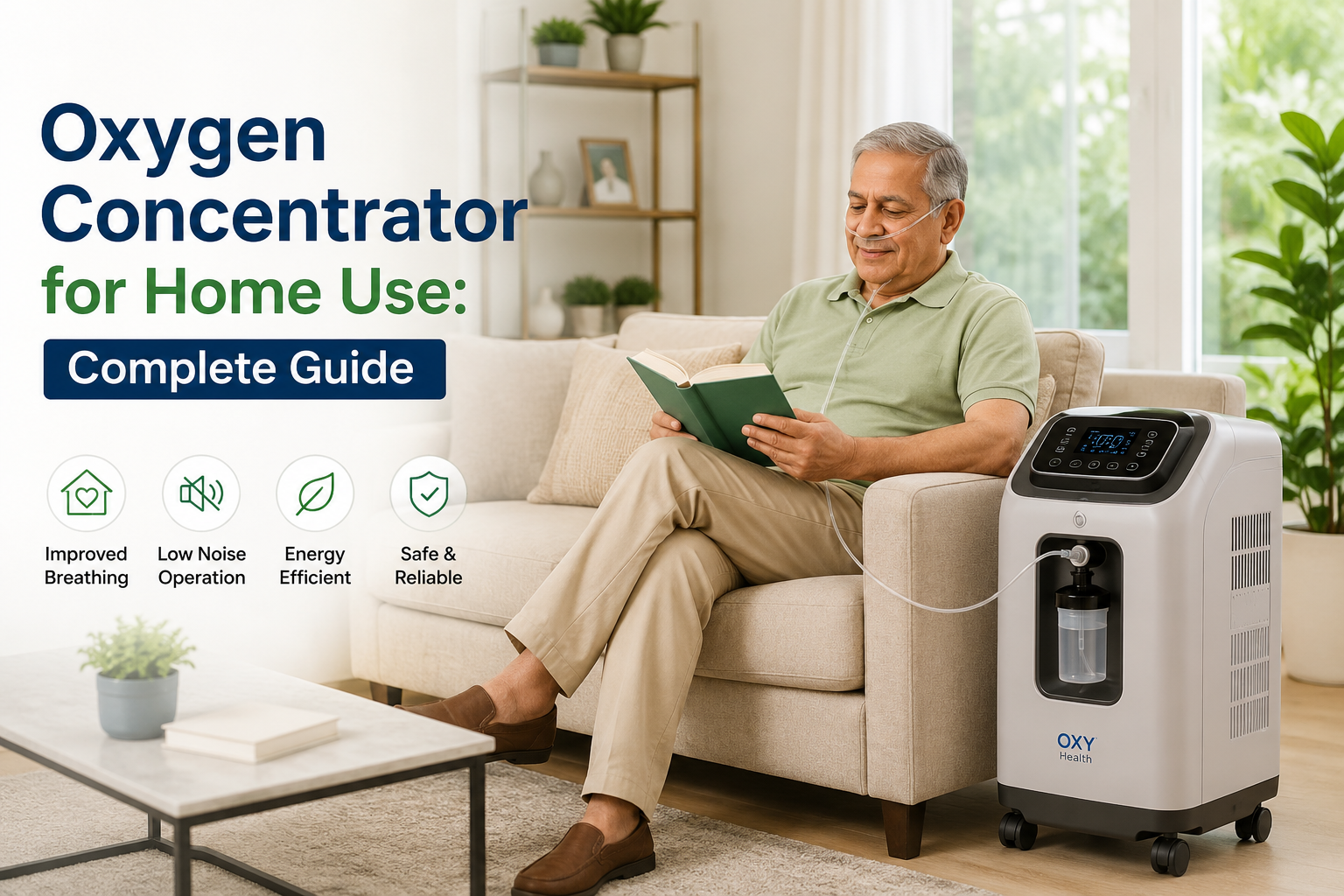
For people living with chronic respiratory conditions, getting enough oxygen isn't always something the body can manage on its own. When blood oxygen levels drop too low (a condition doctors call hypoxemia), supplemental oxygen becomes a critical part of daily life. Increasingly, that support comes not from a hospital bed, but from a device sitting quietly in the corner of a living room: the oxygen concentrator for home use.
This guide covers how home oxygen concentrators work, who typically needs one, how to think about flow rate and portability, and how to use one safely, so you can have an informed conversation with your doctor or pulmonologist about whether home oxygen therapy is right for you or a loved one.
How Does an Oxygen Concentrator Work?
Unlike an oxygen tank, which stores a finite supply of compressed or liquid oxygen, a concentrator generates its own supply continuously. It draws in ordinary room air, filters out nitrogen and other gases through an internal sieve system, and delivers a stream of concentrated oxygen, typically in the 90%+ purity range, to the user through a nasal cannula or mask.
Because it manufactures oxygen on demand rather than storing it, a concentrator never "runs out" the way a tank does, as long as it has a power source. This is one of the biggest reasons home oxygen therapy has shifted so heavily toward concentrators over the last few decades.
Oxygen Concentrator vs Oxygen Tank
The core difference comes down to supply and maintenance:
- Oxygen tanks hold a fixed volume of oxygen and need to be refilled or replaced once depleted, requiring regular deliveries or trips to a supplier.
- Oxygen concentrators continuously produce oxygen from the surrounding air, eliminating the need for refills, though they do require electricity (or a charged battery, for portable models) and regular filter maintenance.
For most home-based, long-term therapy, concentrators tend to be more convenient and cost-effective over time, while tanks are still often used as a backup or for short-term, high-flow needs.
What Is Supplemental Oxygen Therapy?
Supplemental oxygen therapy is a treatment prescribed when a patient's blood oxygen saturation (SpO2) falls below a healthy threshold, usually measured with a pulse oximeter, a small clip-on device placed on the fingertip. When SpO2 consistently reads low, the body's tissues and organs aren't getting enough oxygen to function properly, and a doctor may prescribe supplemental oxygen to bring those levels back into a safe range.
This therapy is typically managed by a pulmonologist or primary care physician, based on arterial blood gas (ABG) testing, overnight oximetry, or repeated pulse oximeter readings, not something a patient should self-prescribe.
Signs You Need Supplemental Oxygen
Common signs that may prompt a doctor to evaluate oxygen therapy include:
- Persistent shortness of breath, even during light activity or rest
- Bluish tint to the lips or fingertips (a sign of low oxygen saturation)
- Chronic fatigue or confusion that doesn't have another clear explanation
- A diagnosed condition such as COPD, pulmonary fibrosis, or severe asthma with documented low SpO2 readings
If you're experiencing these symptoms, the right first step is a conversation with your doctor and a proper oxygen saturation test, not purchasing a device on your own.
Who Typically Needs a Home Oxygen Concentrator?
Home oxygen concentrators serve a range of patients, each with different needs and flow requirements.
Oxygen Concentrator for COPD Patients
Chronic Obstructive Pulmonary Disease (COPD) is one of the most common reasons for long-term home oxygen therapy. As the disease progresses, the lungs become less efficient at transferring oxygen into the bloodstream, and many COPD patients rely on daily, sometimes continuous, supplemental oxygen to manage symptoms and maintain quality of life.
Home Oxygen Therapy for Chronic Lung Disease
Beyond COPD, conditions like pulmonary fibrosis, emphysema, and other chronic lung diseases can also require ongoing oxygen support. For these patients, a home concentrator often becomes a long-term fixture of daily care rather than a short-term intervention.
Oxygen Therapy for Severe Asthma
While most asthma is managed with inhalers and medication, severe or poorly controlled asthma can sometimes require supplemental oxygen, particularly during flare-ups or recovery periods, under a doctor's guidance.
Oxygen Concentrator for Sleep Apnea
Some patients with sleep apnea, particularly when combined with an underlying respiratory or cardiac condition, may be prescribed supplemental oxygen to use alongside a CPAP or BiPAP machine during sleep, helping maintain stable oxygen levels overnight.
It's worth repeating: oxygen therapy of any kind should always be based on a physician's prescription and objective testing, not assumed from symptoms alone.
Understanding Flow Rate and Capacity
One of the most important, and most misunderstood, aspects of choosing a concentrator is flow rate.
How Many Liters Per Minute of Oxygen Do I Need?
Flow rate is measured in liters per minute (LPM), and it reflects how much oxygen the device delivers to the patient each minute. Prescribed flow rates vary widely from person to person; some patients need as little as 1-2 LPM, while others with more advanced respiratory disease may require considerably more. Your doctor determines this number based on your SpO2 readings and overall respiratory function; it isn't something to guess or self-adjust.
Low Flow vs High Flow Oxygen Concentrators Explained
- Low-flow concentrators typically deliver up to around 5 LPM and are suited to patients with mild to moderate oxygen needs.
- High-flow concentrators can deliver higher continuous flow rates, designed for patients with more significant respiratory demands.
5L vs 10L Oxygen Concentrator: Which One Do You Need?
The difference between a 5L and a 10L concentrator generally comes down to the maximum oxygen output and the severity of the patient's condition. Someone with mild to moderate needs may be well-served by a lower-capacity device, while a patient with more advanced lung disease may require the higher continuous output of a 10L unit. This decision should always be made in consultation with a physician, factoring in current SpO2 levels, activity requirements, and any anticipated changes in condition over time.
Portable vs Stationary Oxygen Concentrators
Not all home concentrators are built the same way, and the right choice often depends on lifestyle as much as medical need.
Portable Oxygen Concentrator vs Stationary Oxygen Concentrator
- Stationary concentrators are typically larger, plug into a standard wall outlet, and are designed to deliver higher, continuous flow rates, ideal for use at home, especially overnight.
- Portable concentrators are smaller, battery-powered, and designed for mobility, making them a good fit for patients who need oxygen support while out running errands, traveling, or staying active.
Many patients use a combination of both: a stationary unit at home and a portable device for outings.
Can You Travel With an Oxygen Concentrator?
Many portable oxygen concentrators are approved for air travel, though airlines have specific requirements around battery life, device certification (such as FAA approval), and advance notice. If travel is part of your routine, this is worth discussing directly with both your airline and your durable medical equipment (DME) provider well ahead of time.
Oxygen Purity and Performance
Oxygen Concentrator Purity Levels Explained
Most home oxygen concentrators are designed to deliver oxygen concentration in the range of roughly 87–96% purity, depending on the device and flow setting, often expressed as a percentage with a small margin (for example, "93% ± 3%"). This purity level, along with outlet pressure, determines how effectively the device can meet a patient's prescribed oxygen needs. Devices also typically specify performance metrics like decibel (noise) output and electrical safety classification, which matter for both comfort and safety in a home environment.
Safety and Maintenance at Home
Using an oxygen concentrator safely is just as important as using the right flow rate.
Oxygen Concentrator Safety Tips for Home Use
- Keep the device away from open flames, gas stoves, and smoking materials, since oxygen supports combustion and increases fire risk
- Ensure proper ventilation around the device; avoid enclosing it in tight spaces
- Place the unit on a stable, flat surface to avoid tipping, especially for models on rolling casters
- Have a backup plan (such as a battery-powered portable unit or oxygen tank) in case of power outages
How Often to Change Oxygen Concentrator Filters
Most concentrators use both external and internal filters that need regular attention. External filters often benefit from a simple rinse every one to two weeks, while internal filters may need periodic replacement per the manufacturer's guidance. Regular filter maintenance helps preserve oxygen purity and prolongs the life of the device.
Oxygen Concentrator Alarms Explained
Home concentrators are typically equipped with audible and visual alarms for:
- Low flow or blocked airflow: often caused by a kinked tube or clogged filter
- Low or high pressure: may indicate a mechanical issue requiring service
- Power failure: alerts the user to switch to a backup oxygen source immediately
Understanding what each alarm means, and having a plan for how to respond, is an essential part of safe home oxygen therapy.
Noise, Comfort, and Daily Use
Oxygen Concentrator Noise Levels: What's Normal
Most modern home concentrators operate fairly quietly, often in the range of 40 decibels or lower, comparable to a quiet conversation or a running refrigerator. A sudden increase in noise or unusual sounds can be a sign that the device needs servicing or filter maintenance.
Best Practices for Using an Oxygen Concentrator at Night
- Position the device where tubing can reach comfortably without pulling or kinking
- Use a humidifier attachment if recommended, to prevent nasal dryness overnight
- Keep the unit's air intake unobstructed, away from curtains, bedding, or furniture
- Do a nightly check of tubing and cannula fit before sleep, especially for continuous overnight use
How to Choose the Right Oxygen Concentrator for Home Use
Bringing it all together, here's a simple checklist to guide the decision:
- Confirm your prescribed flow rate (LPM) with your doctor; never estimate this yourself
- Consider your lifestyle: do you need a stationary unit, a portable one, or both?
- Check oxygen purity and pressure specifications to ensure they align with your prescription
- Factor in noise level, especially if the device will run overnight in a bedroom
- Plan for maintenance: filter changes, cleaning, and a backup power or oxygen source
Questions to Ask Your Doctor About Oxygen Therapy
- What flow rate (LPM) do I need, and could it change over time?
- Should I use a stationary concentrator, a portable one, or both?
- How often should my oxygen saturation be reassessed?
- Are there activity restrictions or precautions I should follow while on oxygen therapy?
- What should I do if the device alarms or malfunctions?
Key Takeaways
A home oxygen concentrator can make a significant difference in quality of life for patients managing COPD, chronic lung disease, severe asthma, or other conditions involving low blood oxygen. Understanding how these devices work, from flow rate and purity to safety alarms and maintenance, helps patients and caregivers use them confidently and effectively. As always, decisions about flow rate, device type, and therapy duration should be made in partnership with a physician or pulmonologist, based on proper oxygen saturation testing.
If you're ready to explore your options, take a look at our range of home oxygen concentrators to find a flow rate and format that fits your needs.


