
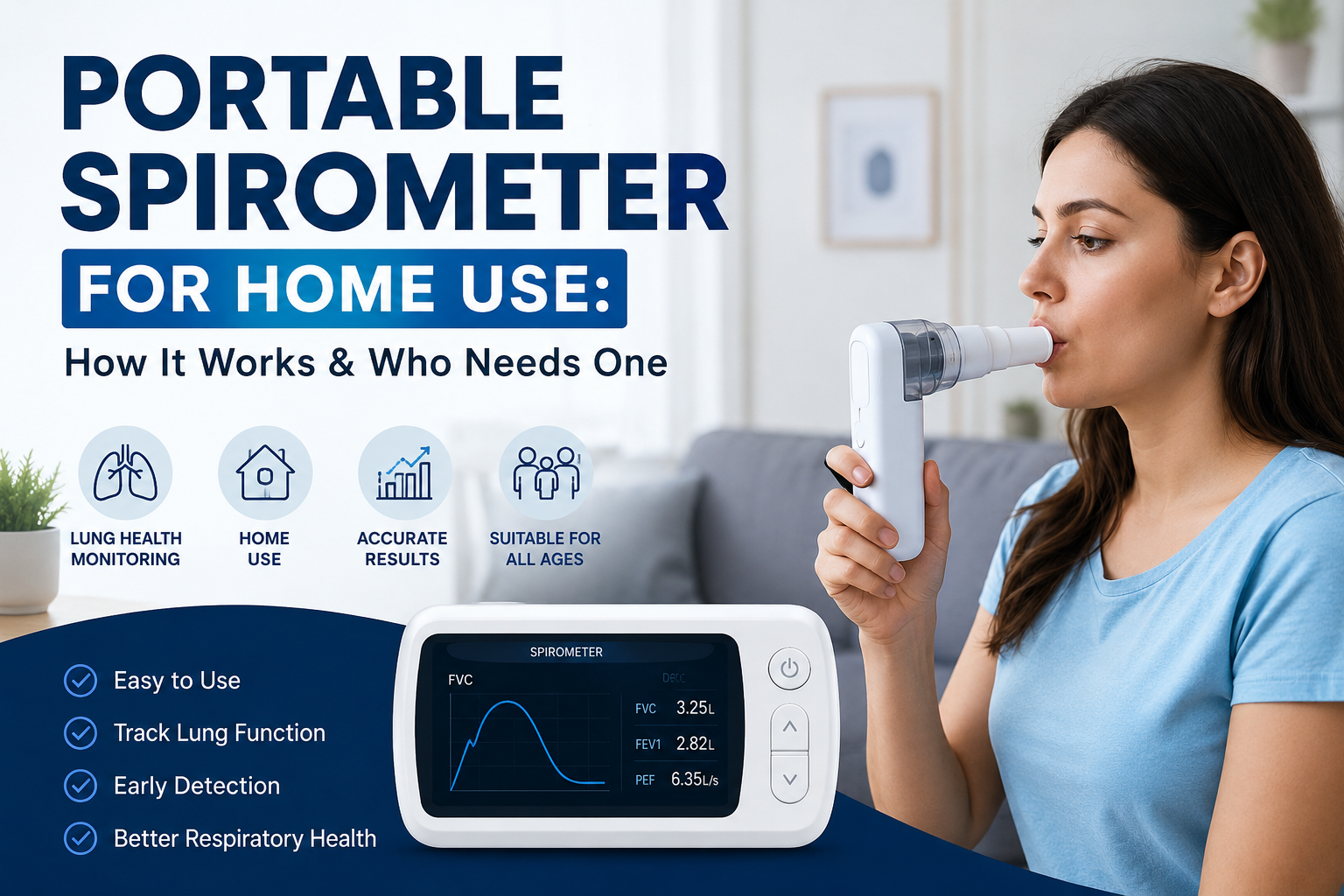
Portable Spirometer for Home Use: How It Works & Who Needs One
Breathing is something most of us never think about - until it becomes difficult. For people managing asthma, COPD, or recovering from a respiratory illness, keeping a close eye on lung function can make the difference between catching a problem early and ending up in an emergency room. That's where a portable spirometer for home use comes in.
This guide walks you through what a portable spirometer is, how it works, who it's for, and how to use one correctly - so you can make sense of your own lung health data with confidence.
What Is a Portable Spirometer and How Does It Work?
A spirometer is a device that measures how much air you can breathe out, and how fast you can do it. You take a deep breath in, then exhale as hard and as long as you can into the device's mouthpiece. The spirometer records that airflow and converts it into numbers your doctor can use to assess how well your lungs are functioning.
A portable spirometer does the same job as the large machines you'd find in a hospital's pulmonary function lab, just in a smaller, simpler, home-friendly form. Hospital-grade devices are typically operated by trained technicians and used for detailed diagnostic testing, while home and portable versions are designed for everyday users to track trends over time — daily, weekly, or whenever symptoms flare up.
Is a Home Spirometer Worth It?
For many people with a diagnosed respiratory condition, the answer is yes. A home spirometer won't replace your doctor's equipment or expertise, but it gives you an ongoing picture of your lung function between appointments. Instead of relying only on how you feel on a given day, you get objective numbers that can reveal a decline before symptoms become obvious. For someone with no respiratory history and no symptoms, it's less essential - but for those managing a chronic condition or recovering from illness, it's often a genuinely useful tool.

Buy Now: Portable Spirometry for Clinics & Hospitals
Who Should Consider Using a Portable Spirometer?
Home spirometry isn't just for one type of patient. Here's how different groups typically use it.
Portable Spirometer for Asthma Patients
Asthma can change quickly - a trigger like pollen, cold air, or exercise can cause airways to narrow within minutes. Regular use of a portable spirometer for asthma patients spot early warning signs of a flare-up, sometimes before symptoms are noticeable, giving them time to adjust medication or avoid triggers before things get worse.
Home Spirometry for COPD Patients
Chronic Obstructive Pulmonary Disease tends to progress gradually, and small declines in lung function can be easy to miss day to day. Daily or weekly monitoring at home helps COPD patients and their care teams track that gradual change and catch exacerbations early, rather than after a hospital visit becomes necessary.
Portable Spirometer for Post-COVID Lung Monitoring
Many people recovering from COVID-19 experience lingering effects on lung capacity. A portable spirometer allows for simple, repeatable tracking of recovery progress over weeks or months, giving both patients and doctors a clearer picture of whether lung function is returning to normal.
Portable Spirometer for Children with Asthma
Using a spirometer with children requires a bit more patience - proper technique matters, and kids may need practice before results are reliable. Parental supervision, short and encouraging instructions, and consistency (testing at the same time of day) all help produce more accurate readings for younger users.
Lung Function Tracking for Smokers
Smokers - current or former, are at higher risk for gradual lung function decline that often goes unnoticed until it's significant. Periodic spirometry testing can serve as an early-detection tool, flagging changes worth discussing with a doctor well before symptoms like breathlessness appear.

Check Out Our New Generation PC-based Spirometers
Signs You Need a Portable Spirometer
You don't need a diagnosed condition to consider monitoring your lung function, but certain signs make it particularly worthwhile:
- Frequent shortness of breath, even with light activity
- A persistent or recurring cough
- A known respiratory condition such as asthma, COPD, or pulmonary fibrosis
- Recovery from a respiratory illness or infection
- A doctor's recommendation to track lung function between visits
If any of these apply to you, home spirometry can add a useful layer of insight to how you manage your health.
How to Use a Portable Spirometer at Home
Getting an accurate reading depends heavily on proper technique. Here's a general step-by-step approach:
- Sit upright in a comfortable, supported position — posture affects how much air you can move.
- Take a full, deep breath in, filling your lungs as completely as possible.
- Seal your lips tightly around the mouthpiece so no air escapes.
- Exhale as hard and fast as you can, and keep blowing until your lungs feel completely empty.
- Repeat the test two to three times, since results can vary between attempts, and note the most consistent readings.
Common mistakes include not taking a full enough breath before exhaling, stopping too early during the exhale, or an incomplete seal around the mouthpiece - all of which can skew results. Testing at the same time of day, using the same effort level, and following the device's instructions closely will give you the most reliable trend data over time.
Understanding Your Results
Spirometry results can look intimidating at first, but the core numbers are fairly straightforward once explained.
Understanding FEV1 and FVC on a Portable Device
Two measurements matter most:
- FVC (Forced Vital Capacity): the total amount of air you can forcefully exhale after a full breath in.
- FEV1 (Forced Expiratory Volume in 1 second): how much of that air you can push out in the first second.
Together, these numbers - and the ratio between them - help indicate whether your airways are functioning normally or showing signs of obstruction or restriction.
How to Read Spirometry Results from a Home Device
Most portable spirometers display your results as a percentage of a "predicted" value, based on your age, height, gender, and sometimes ethnicity. A reading close to or above 100% of predicted is generally considered normal, while consistently lower readings may indicate reduced lung function. That said, a single number in isolation means little - it's the trend over time, and your doctor's interpretation of it, that carries the most value. Home devices are a tracking tool, not a diagnostic one.
How Accurate Are Portable Spirometers?
Accuracy depends on a few factors: the quality of the device, how well it's maintained, and - most importantly - the technique of the person using it. Even a high-quality spirometer will produce misleading results if the user doesn't take a full breath or doesn't exhale forcefully enough.
Home and portable devices are generally reliable for tracking personal trends over time, but they're not intended to replace clinical-grade testing for formal diagnosis. Think of a home spirometer the way you might think of a home blood pressure monitor: useful for day-to-day tracking and catching changes early, but not a substitute for an in-office evaluation when something looks off.
Portable Spirometer vs. Peak Flow Meter
These two devices are often confused, but they measure different things.
- A peak flow meter measures only your peak expiratory flow - essentially, how fast you can blow air out at its fastest point. It's simple, inexpensive, and useful for a quick daily check, especially for asthma patients watching for sudden changes.
- A portable spirometer measures a fuller picture of lung function, including FVC and FEV1, giving a more detailed and clinically meaningful set of data.
If you need a quick daily snapshot, a peak flow meter may be enough. If you or your doctor want more detailed, trend-worthy data, a portable spirometer is the better fit.
Benefits of Home Spirometry Testing
Bringing it all together, the main advantages of testing your lung function at home include:
- Early detection of changes in lung function, often before symptoms appear
- Fewer unnecessary clinic visits, since routine monitoring can happen at home
- Better chronic disease management, with more data points for you and your doctor to work with
- Peace of mind, especially for those recovering from respiratory illness or managing a long-term condition
Not Sure Which Spirometer Fits for you, Check Our Range of Spirometer devices
Limitations and When to See a Doctor Immediately
A home spirometer is a monitoring tool, not a diagnostic one — it can't tell you why your numbers have changed, only that they have. Interpretation should always involve a healthcare professional, especially if you notice a consistent downward trend.
Regardless of what your spirometer shows, seek medical attention right away if you experience:
- Severe shortness of breath or breathing difficulty
- Chest pain or tightness
- Bluish lips or fingertips
- Confusion or extreme fatigue accompanying breathing trouble
These are signs that require immediate care - don't wait to check your device first.
Key Takeaways
A portable spirometer for home use can be a genuinely valuable tool for anyone managing asthma, COPD, post-COVID recovery, or general respiratory health monitoring. It works best when used consistently, with correct technique, and alongside - not instead of - regular care from your doctor. Understanding your FEV1, FVC, and overall trends over time turns a simple daily test into meaningful, actionable health data.
If you're exploring your options for a home lung monitoring device, our guide to choosing a spirometer covers what features and specifications actually matter, so you can pick one suited to your needs.


