
Why Vital Signs Monitoring Matters in Home Healthcare

Check Out Why Patient Trust Edan iM 20 Edan Vital Signs Monitor for Home Health Monitoring
What Are Vital Signs and Why Are They Clinically Relevant?
The Five Core Vital Signs
- Body temperature – used to assess infection, inflammation, or metabolic abnormalities
- Pulse rate (heart rate) – reflects cardiac function and rhythm.
- Respiratory rate – indicates breathing efficiency and respiratory stress.
- Blood pressure – evaluates circulatory system status
- Oxygen saturation (SpO₂) – measures the percentage of oxygen carried in the blood.
Additional Parameters Commonly Monitored at Home
- Blood glucose levels (diabetes care)
- Body weight (heart failure and renal monitoring)
- Pain scores (post-operative or chronic pain contexts)
- Heart rhythm or ECG data (selected cardiac conditions)
Clinical Use of Vital Signs Monitoring in Home Healthcare
Early Identification of Physiological Deterioration
Chronic Disease Management
- Diabetes (blood glucose tracking)
- Hypertension (blood pressure monitoring)
- Heart disease (heart rate and weight trends)
- COPD and asthma (oxygen saturation and respiratory rate)
Post-Hospital and Post-Surgical Follow-Up
- Track recovery progress
- Identify signs that may require follow-up.
- Support continuity between inpatient and outpatient care
Older Adult Care
- Blood pressure changes related to posture.
- Medication-related physiological effects
- Gradual functional or health status changes
Still Have Confusion - Read Our Vital Signs Monitor Buyer's Guide 2026
Technologies Used for Home Vital Signs Monitoring
Traditional Monitoring Devices
Common devices include:
-
Blood pressure monitors
-
Thermometers
-
Pulse oximeters
-
Blood glucose meters
These tools remain widely used due to their simplicity and reliability.
Connected and Smart Monitoring Devices
Modern devices often feature:
-
Bluetooth or Wi-Fi connectivity
-
Automated data capture
-
Mobile app integration
These systems reduce manual recording and improve data consistency.
Remote Patient Monitoring (RPM) Systems
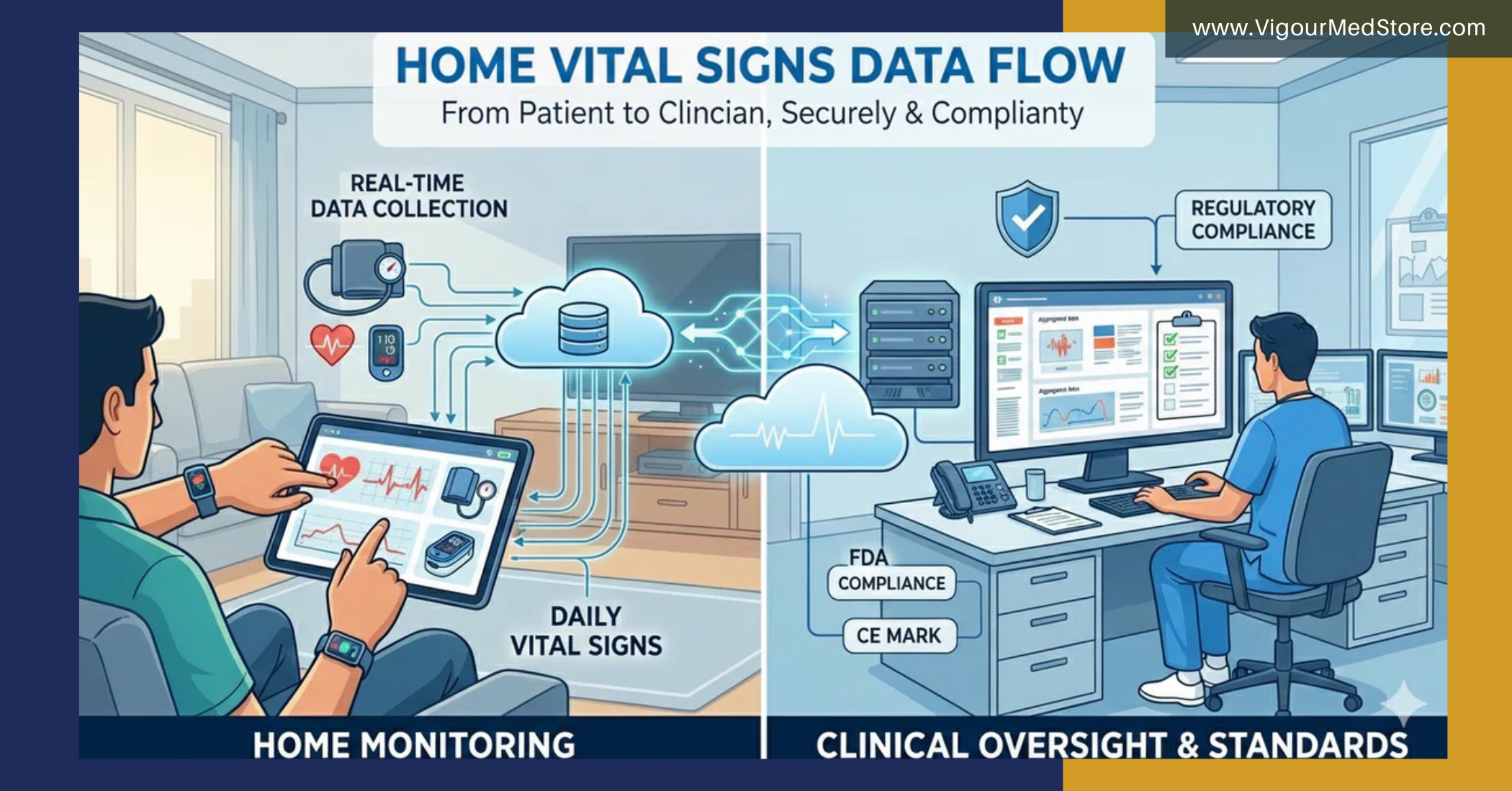
RPM systems securely transmit vital signs data to healthcare providers, often integrating with electronic health records and triggering alerts when readings fall outside predefined ranges.
Who Benefits Most from Home Vital Signs Monitoring?
Home monitoring is particularly beneficial for:
- Individuals with chronic medical conditions
- Older adults receiving home health services
- Patients recovering after surgery or hospitalisation.
- Immunocompromised individuals under close clinical observation
Best Practices for Accurate Home Vital Signs Monitoring
Proper Measurement Technique
Accuracy depends on correct timing, posture, device placement, and adherence to clinical instructions.
Choosing Clinically Validated Equipment
Healthcare providers recommend using FDA-cleared or medically validated devices to ensure measurement reliability.
Data Recording and Review
Consistent logging helps distinguish normal variability from clinically meaningful changes.
Patient and Caregiver Education
Initial training and periodic reinforcement reduce user error and improve data quality.
How Clinicians Use Home Vital Signs Data
Healthcare providers use home monitoring data to:
-
Prepare for telehealth consultations
-
Adjust medications and care plans
-
Identify early risk patterns using analytics tools
This supports proactive, personalized care delivery.
Future of Vital Signs Monitoring in Home Healthcare
Emerging developments include AI-assisted trend analysis, smart home integration, continuous passive monitoring, and contactless sensor technologies. These innovations aim to improve accuracy while reducing patient burden.
Conclusion
Vital signs monitoring in home healthcare is a clinically established practice that supports early detection, chronic disease management, and safer recovery outside traditional medical settings. When performed using validated devices and guided by healthcare professionals, it improves continuity of care, patient engagement, and long-term health outcomes.
Patients considering home monitoring should consult their healthcare provider to determine which vital signs to track, how often to measure them, and how the data will be used in their care plan.


