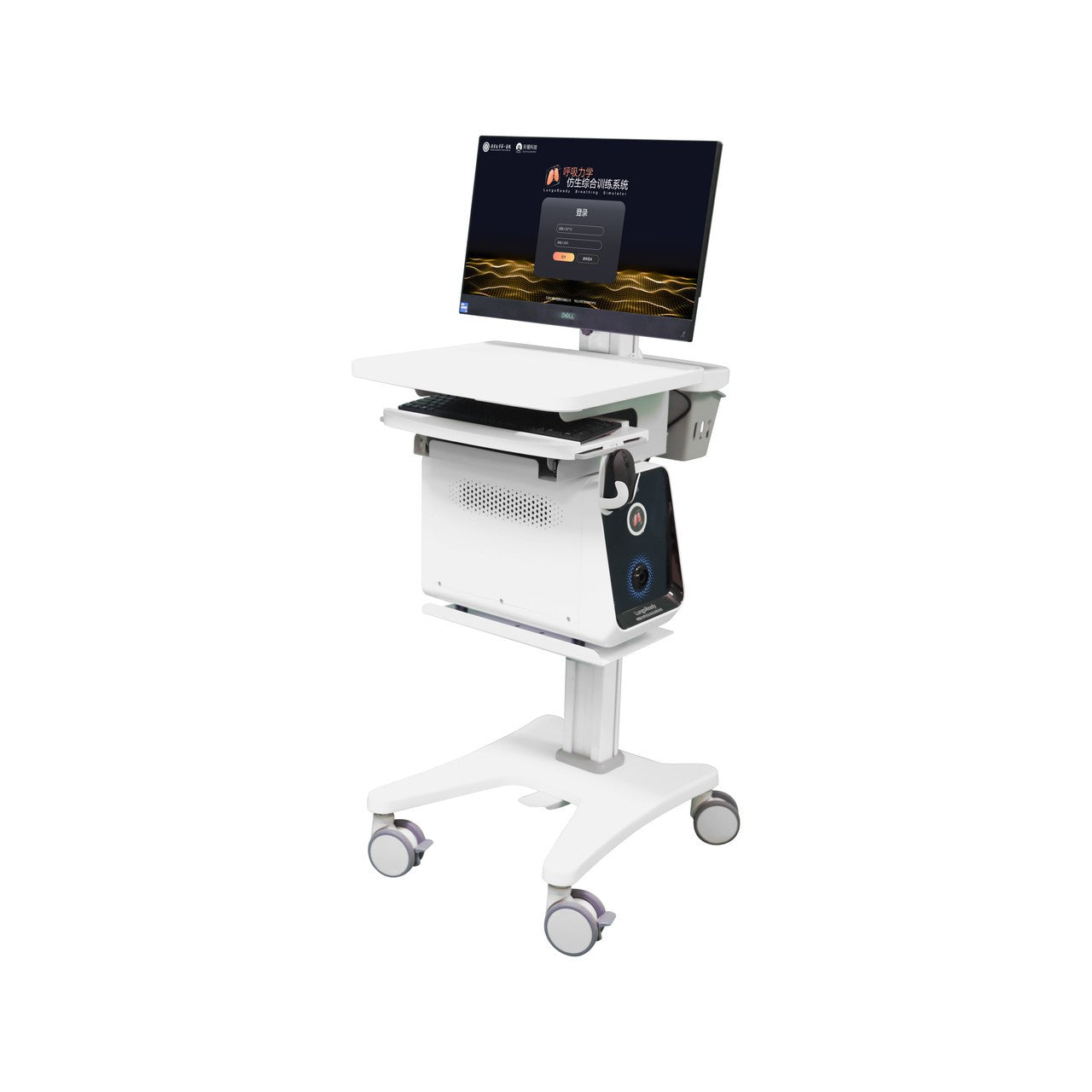
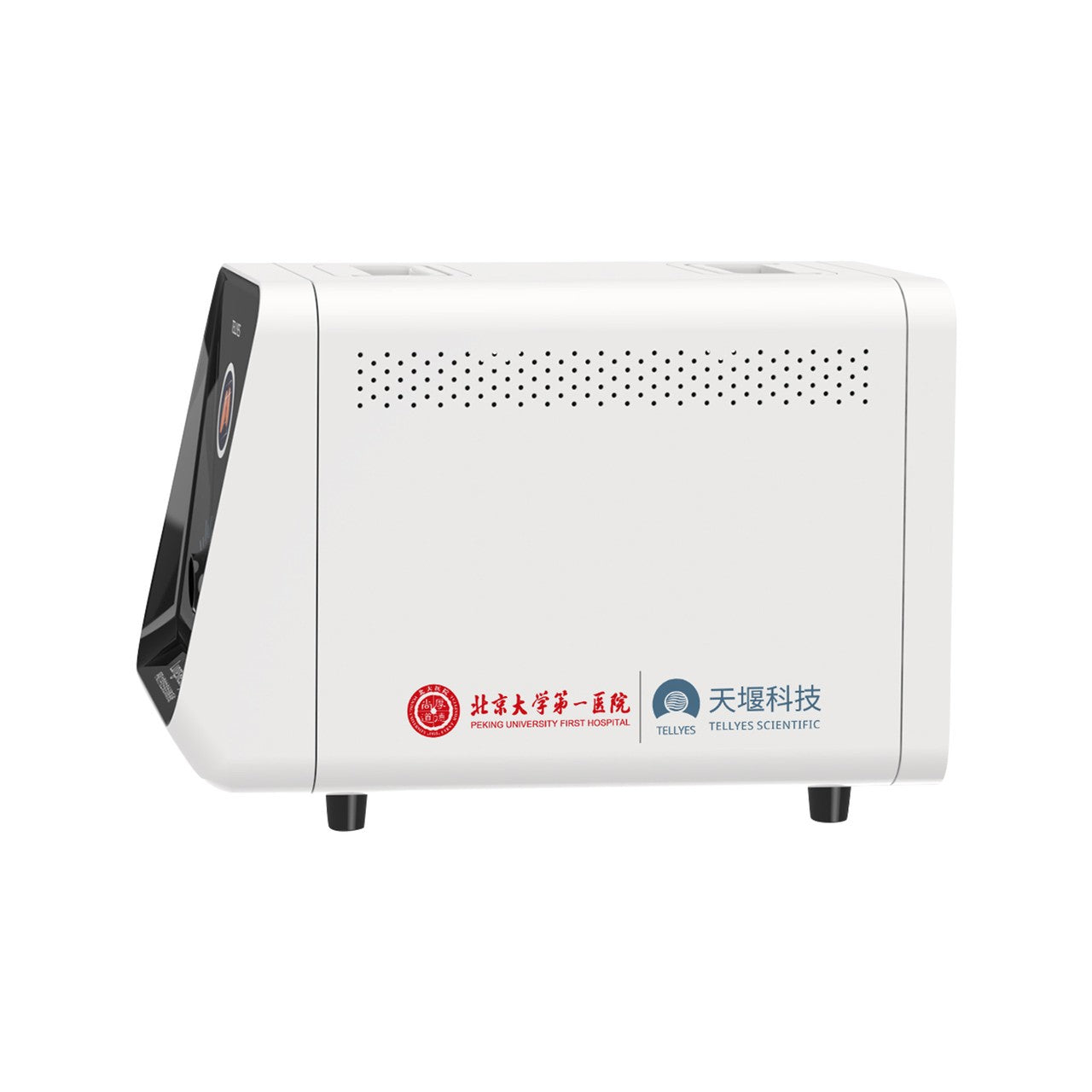
The Anatomy Lab-A-112551 Lungs Ready Breathing Simulator, 1/ea

  • SKU: The Anatomy Lab-A-112551
  • SKU: The Anatomy Lab-A-112551
  • Condition: Brand New 
  • Manufacturer Warranty: 1 year
  • MPN: A-112551
  • Est. Delivery: 7 to 10 Days
  • Shipping: Calculated at Checkout
  • Country Of Origin: China
  • MPN: A-112551
  • Est. Delivery Date: Jan 02 to Jan 12

Precio:
Precio de venta$59,629.30 Precio habitual$67,620.00

Gastos de envío calculados en la caja

Stock:
Disponible

Descripción

Features

  • LungsReady workstation supports height adjustment from 0 to 40cm.
  • 3L air storage capacity. By changing parameters, LungsReady is capable of simulating respiratory disease from the full range of patients?– neonatal to adult, male to female with different weights.
  • LungsReady automatically detects parameter adjustments and responds and reacts accordingly.
  • LungsReady uses high-precision bearings and ball screws to perform linear motion. Besides, a high-sensitivity encoder is applied for detection, which can precisely control the linear movement distance, thus accurately controlling the breathing air volume and achieving high-speed, smooth and noise-free operation.
  • LungsReady can detect the flow rate, pressure, tidal volume of the ventilator and anesthesia machine and generate corresponding waveforms (F-T, Paw-T, Pmus-T, Palv-T, V-T) and ring diagrams (F-V, Paw-V, Paw-F).
  • When LungsReady simulates a patient without spontaneous breathing, controlled ventilation can be done by a ventilator. LungsReady can perform the corresponding breathing movement according to the mode and parameter settings of the mechanical ventilation.
  • When LungsReady simulates a patient who has spontaneous breathing, the spontaneous breathing can trigger the mechanical ventilation. If the spontaneous breathing is strong, patient "fighting the ventilator" waveform will be generated.

Specifications

  • The system comes with 15 real clinical cases and 50 basic respiratory mechanics models of healthy people and COPD, ARDS as well as other types of patients. Basic respiratory mechanics models can be expanded infinitely according to the needs of teachers.
  • More than 20 common parameters such as compliance, airway resistance, respiratory muscle pressure, respiratory time ratio, respiratory frequency, functional residual capacity can be adjusted to affect the change of system breathing work. In addition to linear compliance, nonlinear compliance can also be adjusted.
  • The changing trend of the patient's condition can be simulated through the trend breathing settings, such as simulating the gradual weakening of the respiratory muscle work after gas anesthesia; simulating the fluctuation of patient's breathing movement through random breathing to add more realism; simulating unstable breathing with diseases such as asthma.
  • Quick buttons for common human symptoms and diseases such as coughing, sighing and suffocation can simulate the impact of coughing on ventilation, sigh-like breathing and waveform changes when suffocation occurs.
  • LungsReady can monitor the real-time changes of 18 parameters such as respiratory rate, I:E ratio, and peak airway pressure with respiratory movement, and quickly set up the displayed monitoring parameters.
  • LungsReady comes with built-in dynamic respiratory mechanics models, which can dynamically change with the performance of inhalation and exhalation. The range of tidal volumes can be set according to weight. There is corresponding indication for normal, insufficient, or excessive tidal volumes.
  • The system supports operation review. Users can view operation log details, important parameter trends, and monitoring waveforms. Accounts can be created in the system and each user can see their own operation review, be it teaching or training.
  • Running process can be stopped at any time and the waveforms can be frozen for comparative analysis.
  • Instructors can adjust monitoring parameters, including heart rate and other values as well as dozens of common ECG waveforms.
  • Learners can check the simulation monitoring interface and view the ECG waveforms of different leads on the learner’s tablet display.
  • The system can generate a 12-lead ECG checklist for students to view.
  • Instructors can edit no less than 50 kinds of laboratory tests such as blood gas analysis, chest X-ray, chest CT, lung functions, etc., and send them to learners for them to view through the learner’s tablet display.

También te puede interesar

Visto recientemente